If the entire amount of Rs 24,000 crore is raised, then it would be the biggest fundraising exercise by any Indian company ever.

Vinod Rai, former Comptroller and Auditor General of India, former India women's captain Diana Edulji and banker Vikram Limaye were present at the meeting held at the IDFC Bank's premises in suburban Bandra-Kurla Complex.
Banks should try its best to retain talent.

The other board members will be Sunil Mehta, former non-executive chairman of Punjab National Bank, as the non executive chairman of Yes Bank, Mahesh Krishnamurthy and Atul Bheda as non-executive directors.

AIBEA said that on April 19 its officer bearers would meet in Punjab to decide the next course of action.

After acquiring Grama Vidiyal Microfinance last year, IDFC Bank is looking for opportunities to strengthen its retail capabilities, says Rajiv Lall, its chief,

A senior official with Muthoot Finance said the group would also want to apply for a universal licence.

The currency in circulation (CIC) declined in the first half of this financial year and this is the first time this has happened in H1 in at least 10 years. The CIC on March 31, 2023, was Rs 33.78 trillion, which fell to Rs 33.01 trillion on September 22 -- a difference of about Rs 76,658 crore. In the first half of the last two financial years, the CIC went up by Rs 33,357 crore in FY23 and Rs 84,978 crore in FY22.

The Reserve Bank is planning to extend wholesale Central Bank Digital Currency (CBDC) for transactions for interbank borrowing or call money market, sources said on Tuesday. The pilot in the wholesale segment, known as the Digital Rupee -Wholesale (e-W), was launched on November 1, 2022, with the use case being limited to the settlement of secondary market transactions in government securities. "RBI is now planning to go into the interbank borrowing market.

Corporate India is busy restructuring - through mergers, demergers and splits. That seems to be the new normal as CXOs and boards brainstorm on how to create assets and value. The pitch rose significantly during the third quarter of this financial year (FY24), translating into $32.9-billion worth of such deals - the highest quarterly total since the HDFC Bank-HDFC merger announced in FY22 Q2.
The proposed Rs 10,000 crore (Rs 100 billion) of bond purchase would be done on Monday.
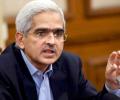
Reserve Bank of India (RBI) Governor Shaktikanta Das had stumped the market in the previous two policies - in August and in October - first with action and then with words. In August, it was the introduction of an incremental cash reserve ratio (I-CRR) to take out excess liquidity, which took the markets by surprise. In October, there was no action. Rather, what is known as "open mouth operation", Das' comment that the central bank might conduct open market operations (OMOs) by selling bonds tempered the euphoria in the bond markets after JP Morgan's inclusion of India in its Emerging Market Bond Index.

The Reserve Bank will launch the first pilot for retail digital rupee in Mumbai, New Delhi, Bengaluru and Bhubaneswar on December 1, and later expand it to nine more cities in the initial phase. This follows a month after the RBI had started a pilot in the digital rupee - wholesale segment on November 1. The Reserve Bank announces the launch of the first pilot for retail digital rupee (e?-R) on December 1, 2022, the central bank said in a statement on Tuesday.

Since the RBI is the 'lender of the last resort', as per terms of arrangement, Yes Bank would have to exhaust immediate liquid assets before accessing this fund.
.jpg)
Of the 11 licence holders, only eight remain in the fray as concerns about profitability and rising competition are making them think twice before jumping in.

Ajit Mishra, vice president, research, Religare Broking, answers your queries.

Vodafone m-pesa was one of the 11 firms that was given payments bank licence by the Reserve Bank of India in 2015.

Foreign portfolio investors' (FPIs') net investments in the domestic debt market surged in December, marking a 77-month high, that is, since July 2017. According to market participants, this significant uptick in FPI inflows can be attributed to the post-domestic policy outcome and the US Federal Reserve's dovish stance at the December policy. FPI inflows into debt stood at Rs 18,393 crore in December against Rs 14,106 crore in November, according to data on the National Securities Depository Limited.

The inflation in vegetables remained stubborn, which jumped 16.91 per cent

Soon after the lifting of the 13-day moratorium at 6 pm, some customers took to social media complaining that they were not able to access certain services, including internet and mobile banking.

2013 foreign currency non-resident deposits to mature in Sep-Nov

Omkeshwar Singh, Head, Rank MF, a mutual fund investment platform, answers your queries.

With over Rs 15,000 crore in deposits, its strategy is a hit for now, but the real test will come when it starts lending to retail and corporate customers in a big way
Besides, two new entities-- IDFC and Bandhan -- have been given full-fledged banking licence.

Two key depts in ministry cold to rationale for one; postal dept says it's more eligible than IDFC or Bandhan, feels 'strong lobby' scuttling its plans.

A potential risk to the rupee's appreciation trajectory lies in the event of a delay in the Federal Reserve's rate cut cycle, particularly if core inflation in the US remains elevated.

The company's IPO -- the first by a private bank in a decade -- was oversubscribed a staggering 69.62 times.
Liquidity in the banking system has slipped into a deficit for the first time in three weeks, prompting banks to borrow the largest quantum of funds from the Reserve Bank of India (RBI) in around a month and a half. The key catalyst for the sudden tightening in liquidity was due to outflows on account of advance tax payments, which occur towards the end of a quarter. Analysts also cited other factors such as a currency leakage and possible interventions by the RBI in the foreign exchange market, which contributed to the tighter liquidity conditions.

It is difficult to say if the banking sector will see the worst behind it by March 2020, warns Tamal Bandyopadhyay.

The sessions court last week began the trial by issuing the process order and then released all the 25 accused present in court on bail. The case will be heard on June 20. All the accused were charged of committing fraud in the initial public offering of the shares of IDFC, which was open for subscription from July 15-July 22 in 2002.
India's first digital rupee pilot project will commence on Tuesday with nine banks, including SBI, HDFC Bank and ICICI Bank, issuing the virtual currency for transactions in government securities. "...the first pilot in the digital rupee - Wholesale segment shall commence on November 1, 2022," the RBI said in a statement on 'Operationalisation of Central Bank Digital Currency-Wholesale (e?-W) Pilot'. It also announced that the first pilot in digital rupee - Retail segment is planned for launch within a month in select locations in closed user groups comprising customers and merchants.

Bandhan financial Services will raise funds via internal accruals.

The sequential expansion in margin was also going to continue as 'largely stable lending rates, coupled with traction in credit growth would support margins in the second half of FY10,' the report said.

India may adopt norms similar to the US Federal Reserve model, which regulates conglomerate-led banks in the country.

Market participants attribute the stability to the Reserve Bank of India's timely intervention in the foreign exchange market, both in terms of selling and buying dollars.

Uttam Prakash Agarwal alleged that Citax and Braich offers were incomplete and did not include firm commitment as to the price, size, timings, confirmation from the banks about availability of the funds.

Sources say given the complexity involved in the process of creating a holding company, which will ultimately be the parent company of banking and other businesses, banks are going slow in acquiring stakes in insurance arms or mutual funds of other lenders.
The rupee has depreciated 10.5 per cent against the dollar this year, making it Asia's worst-performing currency.

'Is it advisable to have more number of scrips in small quantities or a few scrips in big quantities?'
